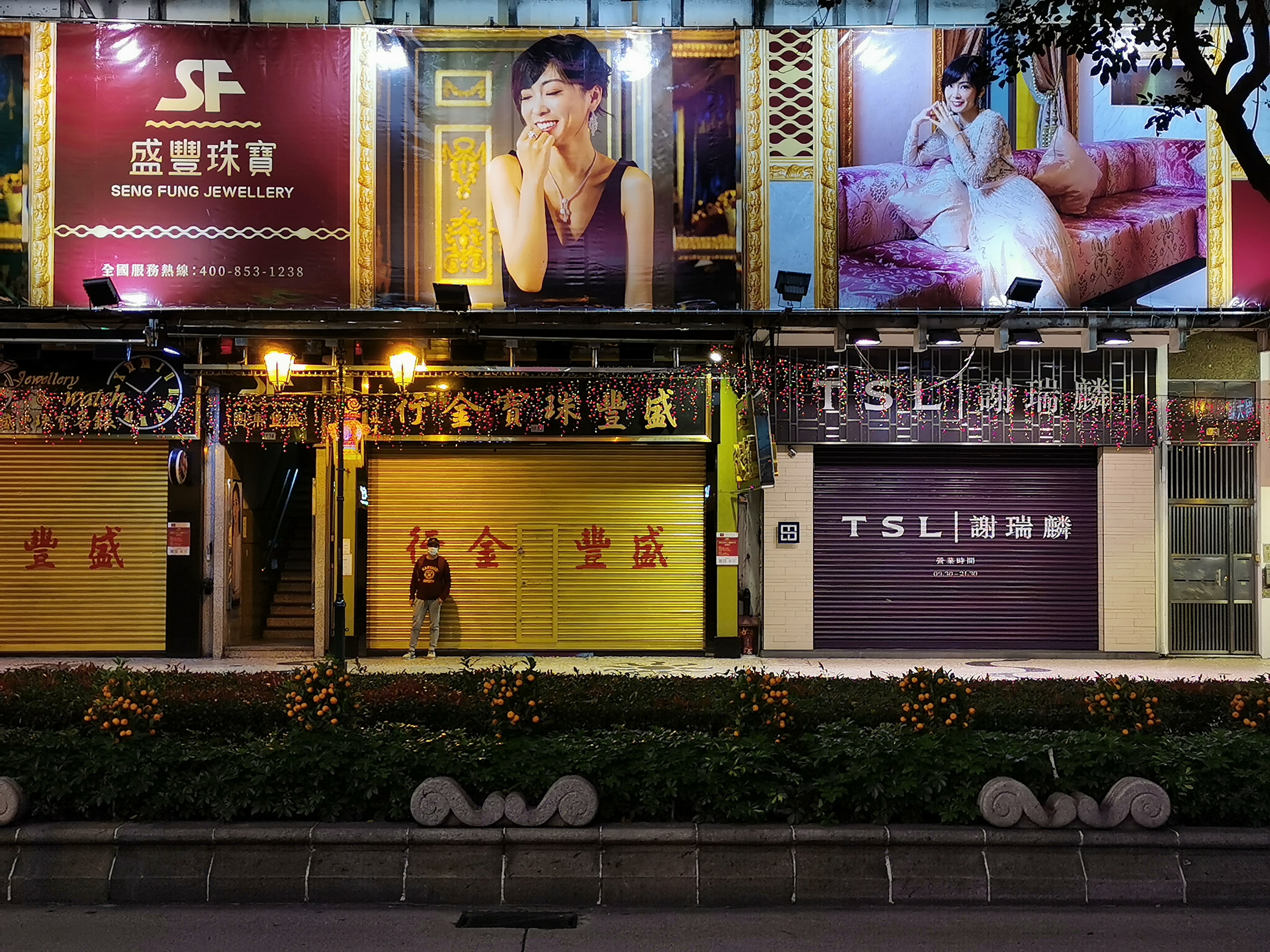
The volume of distressed retail properties in Macau is expected to continue rising amid a tightening credit environment and broader economic uncertainties, including the phased closure of satellite casinos by year-end, property consultancy Jones Lang LaSalle (JLL) said.
In its Macau mid-year 2025 market review released Wednesday, JLL noted that both residential and office sectors remain under pressure, despite a noticeable rebound in tourism.
“Macau’s external economic outlook remains uncertain, and the local economy is still undergoing gradual recovery. Consumer spending has yet to fully rebound, and the property market continues to recalibrate,” said Mark Wong, senior director of value and risk advisory at JLL Macau.
According to the mid-year review, the capital value of prime street-level retail spaces fell 6.6 percent in the first half of 2025, while rental values dipped 0.3 percent.
Retail properties in prime tourist areas have benefited from a surge in visitor arrivals, fueling leasing momentum. In contrast, retail assets located in residential districts continue to face pressure, with vacancy rates on the rise, JLL said.
Macau welcomed 22.68 million visitors in the first seven months of 2025, a 14.9 percent increase from a year earlier. At the current pace, annual visitor arrivals could surpass the record 39.4 million set in 2019.
“Amid a tight credit environment and ongoing macroeconomic uncertainties, the volume of distressed retail assets is expected to rise,” JLL added.
Satellite casino closures
While the firm did not provide the number of distressed retail assets currently on the market, it noted that some investors have acquired high-street units so far this year at discounts exceeding 50 percent from peak valuations
A distressed asset refers to real estate trading at a discount to market value, typically due to liquidity constraints or financial distress experienced by the owner or operator.
“The phased withdrawal of satellite casinos in the second half of the year has raised concerns over potential spillover effects on adjacent [retail] properties, contributing to a more cautious and observant investment environment,” Wong added.
In June, the Macau government and local gaming operators confirmed that nine of the city’s eleven satellite casinos—primarily located in the NAPE and ZAPE districts—would cease operations by the end of 2025 due to changes in gaming regulations. These gaming venues operate under licenses of one of the six gaming concessionaires but are managed by third-party promoters.
Pricing strategies of new housing projects
In the residential sector, capital values for mass-market and high-end properties declined 7.9 percent and 9.6 percent year-on-year, respectively, during the first half of 2025.
“Broader market sentiment remains subdued, with limited deal volumes insufficient to sustain a meaningful rebound. As a result, residential prices have continued to trend downward,” JLL said.
The consultancy noted that developers are launching new projects at prices close to secondary market levels to attract buyers. For example, Lake YOHO, a high-end residential project by YOHO Group in the Nam Van district, launched pre-sales earlier this year, selling over 100 of its 300-plus units.
Looking ahead, JLL expects some developers to continue offering price incentives to boost cash flow, potentially extending the current market adjustment cycle.
Meanwhile, rental dynamics in the residential sector were mixed: the rental value for mass-market units dropped 8.9 percent, while high-end rentals edged up 1.9 percent year-on-year in the first half.
“Rental activity in parts of Macau’s residential leasing market has softened due to a slowdown in the growth of expatriate employees,” it added.
Hotels attract investor interest
The mid-year market review also highlighted that the Macau office sector remained weak, with capital values down 4.1 percent and rental values falling 3.4 percent year-on-year in the first six months. Yields were reported at 3 percent for the overall office market and 3.2 percent for Grade A spaces.
“Most businesses continue to prioritise cost control, with office leasing activity largely driven by lease renewals, particularly among financial institutions and mainland Chinese law firms,” JLL said. “Some international firms are downsizing, relocating back-office operations to frontline retail premises, and actively divesting self-owned office assets to release capital.”
Despite weaknesses in commercial and residential sectors, JLL sees a more optimistic outlook for hotel assets, buoyed by Macau’s tourism recovery.
“At present, hotel yields in Macau remain relatively stable. Both domestic and international investors may view this adjustment period as a strategic entry point for medium-to long-term asset allocation,” Wong added.
link