From Big Macs to Big Brands: 5 Trademark Battles That Redefined the Rules.
McDonald’s vs. Supermac’s: The Underdog That Took Down a Giant.
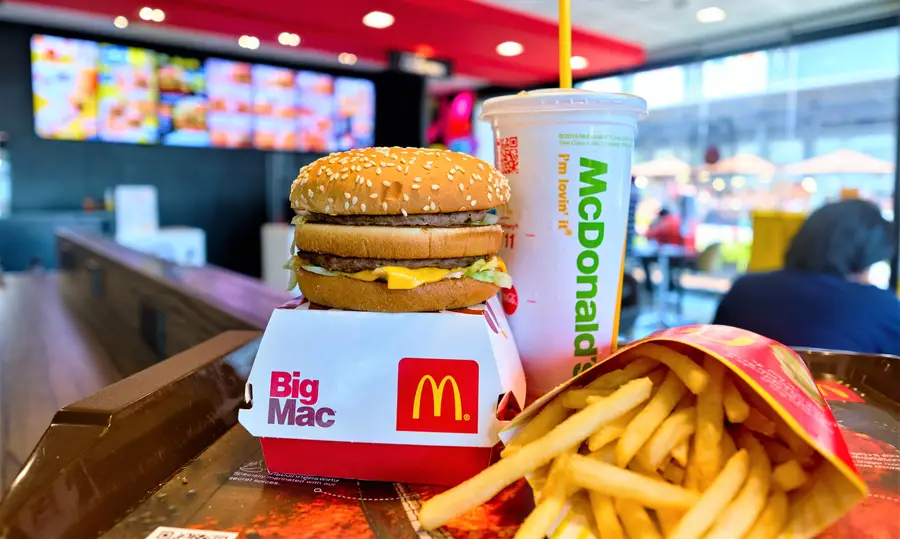
It was labelled one of the most shocking decisions in recent trademark history—but back in June 2024, McDonald’s lost its exclusive EU rights to the term “Big Mac” for chicken burgers. The ruling, handed down by the EUIPO after a years-long battle with Irish fast-food chain Supermac’s, cleared the way for the underdog to expand across Europe—free from McDonald’s trademark restrictions.
The decision sent a powerful message: trademark protection isn’t permanent—it must be actively and appropriately used. And it’s not the first time that even the most powerful corporations have found themselves on the losing end of an IP fight.
Trademarks are more than symbols. They’re strategic business assets, reputation markers, and, increasingly in the age of AI, data-linked identifiers that define a brand’s voice, image, and value across platforms. As businesses integrate AI-generated content, synthetic branding, and algorithmic marketing, trademarks now serve as legal anchors in a rapidly evolving digital landscape.
Below, we dive into the top five most game-changing trademark lawsuits in business history—landmark intellectual property battles that made global headlines and permanently changed how companies protect their brands in the digital age.
1. McDonald’s vs. Supermac’s (2019): Big Mac, Small Chain, Big Win
The Dispute
McDonald’s v Supermac’s. In one of the most surprising upsets in trademark history, McDonald’s found its grip on the iconic “Big Mac” name challenged by a much smaller rival—Supermac’s, an Irish fast-food chain. The dispute began when Supermac’s accused McDonald’s of “trademark bullying,” claiming the global giant was weaponizing the ‘Big Mac’ mark across the EU without actively using it—especially in relation to chicken sandwiches. Supermac’s argued the aggressive trademark tactics were blocking its expansion into Europe, despite no real competitive overlap in menu offerings or branding.
The Outcome
In 2019, the European Union Intellectual Property Office (EUIPO) ruled in favor of Supermac’s, revoking McDonald’s EU trademark rights to “Big Mac” for certain categories, including chicken-based products. The ruling not only allowed Supermac’s to expand into new markets but also delivered a wake-up call to multinational corporations who register trademarks defensively without real-world use.
Key Lessons
-
Use It or Lose It: Trademark protections depend on ongoing, visible use in commerce—especially in Europe. Registration alone isn’t enough.
-
Don’t Overreach: Overly broad or strategic filings can backfire—courts and regulators increasingly favor fair competition and proportional enforcement.
-
Size Doesn’t Always Win: Even small businesses can outmaneuver global giants when armed with evidence and a focused legal strategy.
2. Apple Inc. vs. Samsung Electronics (2011–2018): The $1 Billion Smartphone Showdown
The Dispute
The battle between Apple and Samsung wasn’t just about smartphones—it was about the ownership of innovation itself. In 2011, Apple sued Samsung, accusing the South Korean tech giant of copying core design elements of the iPhone, including its rounded corners, home screen icon layout, and intuitive multi-touch features like pinch-to-zoom. Apple argued that Samsung’s Galaxy devices were “slavish copies” of its flagship product. Samsung fired back, claiming Apple had infringed on its own patents related to wireless transmission and hardware components. The case rapidly escalated into a global war, spanning multiple courts across the U.S., Asia, and Europe.
The Outcome
In 2012, a U.S. jury awarded Apple $1.05 billion in damages—one of the largest-ever intellectual property verdicts at the time. However, the award was reduced after a series of appeals and retrials, with the parties eventually reaching a confidential settlement in 2018. Despite the lengthy litigation, both companies retained their dominant positions in the smartphone market, and the dispute reshaped how tech companies approach design patents.
Key Lessons
-
Design Patents Matter: Visual and functional features—like screen layout or gestures—can be legally protected and hold immense commercial value.
-
Expect Global Litigation: In tech, IP battles often become international, requiring coordination across multiple jurisdictions and legal systems.
-
Innovation vs. Imitation: Even in a fast-moving industry, courts will uphold originality—and imitation, no matter how subtle, can cost billions.
3. Apple Inc. vs. Apple Corps (1978–2006): A Bite Out of the Music Industry
The Dispute
Apple Inc. vs. Apple Corps. Long before iPhones and streaming, Apple Inc. was locked in a battle with one of music’s most iconic entities—Apple Corps, the company founded by The Beatles. The clash began in 1978, when Apple Corps sued Apple Computer for trademark infringement, arguing that the tech upstart’s name encroached on its music-related brand. A 1981 settlement allowed both companies to coexist—on one condition: Apple Computer would not enter the music business.
That truce held until 2003, when Apple launched iTunes, propelling itself into the heart of the music industry. Apple Corps filed another lawsuit, claiming Apple had violated the original agreement by distributing digital music.
The Outcome
In 2006, the UK High Court ruled in favor of Apple Inc., finding that iTunes did not breach the agreement. The judge concluded that Apple was not technically “in the business of music,” but rather “in the business of data transmission”—a crucial distinction that tipped the legal scales.
Key Lessons
-
Agreements Must Anticipate Technological Change: Contracts written in one era may become outdated in the next. Businesses should build flexibility into IP agreements where future tech is likely to evolve.
-
Cross-Industry Trademarks Create Risk: Even companies in different sectors can collide if their brand names intersect. Early clarity and specificity are essential.
-
Renegotiation May Be Inevitable: As markets shift and companies expand into new domains, revisiting old agreements is often better than relying on outdated assumptions.
4. Starbucks vs. Sambucks Coffee (2001–2003): The Small Business Stand-Off
The Dispute
In 2001, coffee giant Starbucks filed a lawsuit against Sambucks, a small independent café in Oregon owned by Sam Penix. Starbucks claimed that the name “Sambucks” and the café’s branding were too similar to its own, potentially causing consumer confusion. Penix, however, pushed back—explaining that the name was a combination of her nickname “Sam” and the term “bucks,” a common slang for money and coffee. She also pointed out that her sunburst logo was entirely distinct from Starbucks’ iconic siren emblem.
The case quickly became a David vs. Goliath story, with local residents rallying around the small business in defiance of corporate pressure.
The Outcome
By 2003, the dispute was resolved. Penix agreed to rebrand the café, but crucially, she was not required to pay any damages. She retained full ownership of her business, and her decision to settle allowed her to move forward without prolonged legal battles. The strong community support arguably influenced the outcome and softened the legal blow.
Key Lessons
-
Do Your Homework Before You Brand: Even small or local businesses should research trademark conflicts and consult legal experts before choosing a name.
-
Public Perception Can Tip the Scales: Large corporations face reputational risks when targeting small businesses—especially when the public sees the case as heavy-handed.
-
Early Settlements Can Save Face (and Money): Legal costs, stress, and bad press can often be avoided by negotiating a resolution before matters escalate.
5. Adidas vs. Payless Shoes (2001–2008): The Price of Stripes
The Dispute
Adidas vs. Payless Shoes. In 2001, global sportswear giant Adidas filed a lawsuit against Payless Shoes, alleging trademark infringement and trade dress violations. At the heart of the dispute was Adidas’ iconic three-stripe design, a globally recognized symbol of the brand. Payless was accused of selling lookalike footwear featuring two and four parallel stripes—designs Adidas argued were close enough to confuse customers and dilute its brand identity.
Despite the stripes being slightly different, Adidas contended that the resemblance was intentional, meant to capitalize on the brand’s reputation without paying licensing fees.
The Outcome
In 2008, after a prolonged legal battle, a U.S. jury sided with Adidas and awarded the company a staggering $305 million—one of the largest trademark verdicts in American history. Although the total was later reduced on appeal, the case became a benchmark example of successful brand protection and enforcement of visual trademarks.
Key Lessons
-
Even Minor Design Tweaks Can Violate IP Law: Changing a few lines or elements doesn’t guarantee safety from trademark claims if the overall impression is confusingly similar.
-
Trade Dress and Branding Matter: Logos and visual elements like stripe patterns are legally protected and can’t be casually mimicked.
-
Trademark Dilution Has Real Consequences: Courts will issue massive monetary penalties if brand dilution is proven—especially when it’s done at scale for profit.
Bonus Case: EasyGroup vs. EasyJet Spin-Offs (2024)
In 2024, EasyGroup, the parent of EasyJet, lost a trademark dispute over its broader “easy” branding strategy. The company’s attempt to claim exclusive rights to use “easy” across all industries failed, reaffirming that trademark scope must be reasonable and defendable.
Why These Cases Matter
Each of these disputes reveals something critical about trademark law:
-
Even iconic brands can lose if they don’t actively use or protect their marks.
-
Small businesses can prevail with strong defense and public support.
-
Judges increasingly look at intent, consumer perception, and market context.
Final Thought
Trademarks aren’t just legal tools—they’re business lifelines. Whether you’re launching a startup, licensing a brand, or expanding into new markets, understanding how IP law is enforced in the real world can mean the difference between lasting success and costly failure.
Frequently Asked Questions About Trademark and IP Law
1. What does it mean to ‘lose’ a trademark, like McDonald’s did with the “Big Mac” in the EU?
Losing a trademark means the owner no longer holds exclusive rights to use that mark in certain categories or regions. In McDonald’s case, the EUIPO found it had not proven genuine commercial use of “Big Mac” for specific products (like chicken burgers), so the registration was revoked for those areas.
2. What is the meaning of IP in law?
In law, IP stands for Intellectual Property—a category of legal rights that protect intangible creations of the mind. These can include inventions, designs, literary and artistic works, symbols, brand names, and more.
3. What are the four main types of intellectual property law?
The four primary types of IP protection are:
- Trademarks – protect brand names, logos, and slogans.
- Copyright – protects original artistic or literary works.
- Patents – protect inventions and innovations.
- Trade Secrets – protect confidential business information (like secret formulas or processes).
4. What are the seven rights of intellectual property?
The “seven IP rights” typically refer to the exclusive rights granted to creators, such as:
- Right of reproduction
- Right of distribution
- Right of public performance
- Right of public display
- Right to create derivatives
- Moral rights (authorship, integrity)
- Economic rights (to license or sell IP)
5. What is IP law in gaming?
In the gaming industry, IP law protects everything from game code and artwork to characters, soundtracks, storylines, and even gameplay mechanics in some cases. Developers and publishers use a combination of copyright, trademark, and patent law to safeguard their creations—and increasingly, they’re also dealing with AI-generated assets and user-generated content rights.
6. How does trademark law apply in the age of AI and digital branding?
Modern trademarks extend into digital environments—covering everything from algorithmic logos to synthetic voices. As AI tools become part of brand creation and marketing, companies must ensure they register and enforce trademarks that reflect both their legacy and emerging digital identity.
7. Can small businesses really win trademark battles against major corporations?
Absolutely. Cases like Supermac’s vs. McDonald’s show that if a smaller business can demonstrate unfair trademark use, courts will side with them—regardless of the opponent’s size. Judges weigh evidence, usage, and fairness over financial power.
8. What’s the difference between a design patent and a trademark?
A trademark protects your brand’s identity—think logos, product names, or jingles. A design patent, on the other hand, protects how a product looks. Both can coexist and are powerful when used together, especially in industries like tech and fashion.
🔗 Related Reading
link