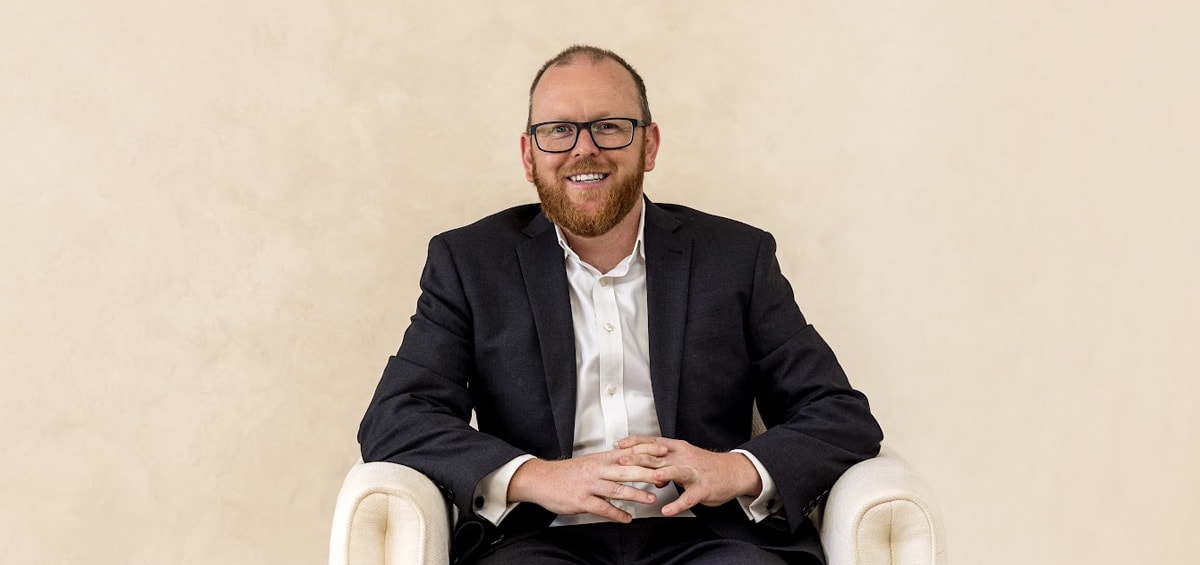

Francisco Veloso spent much of 2025 – his second full year as INSEAD’s dean – in transit. Fontainebleau one week, Abu Dhabi the next, Singapore soon after – the peripatetic rhythm of leading what he calls “a global business school in a world that is no longer taking global for granted.” In a wide-ranging year-end conversation with Poets&Quants, Veloso reflects on uncertainty, fractured markets, and the widening gap between schools that operate globally and those that merely claim to.
It is fitting, then, that in a year defined by geopolitical strain and shifting talent pathways, INSEAD once again finishes No. 1 in P&Q’s composite international MBA ranking. The school claims the top spot for the 11th time in the 16 years we have published the list, and third in a row – a run of dominance unmatched anywhere in graduate management education.
Veloso attributes INSEAD’s consistency to a combination of intellectual leadership, pedagogical innovation, and the structural advantage of true geographic breadth.
“There is no single silver bullet,” he tells P&Q. “But in a year like this one, being global is not just a philosophy – it’s an operating model. Our job is to build bridges in a fractured world.”
HOW THE P&Q INTERNATIONAL RANKING WORKS

Francisco Veloso: “We’ve pushed aggressively on immersive learning – VR, AI, dynamic simulations. We want our students to learn in more effective, engaging ways. … Our mission since our founding has been to build bridges across cultures and markets. In a fractured world, that becomes even more important”
This year’s ranking reaffirms a trend of the Big Three of INSEAD, IESE, and London Business School consistently leading an increasingly competitive global field. The trio is followed by Bocconi, repeating at No. 4, IMD, up from No. 9 last year, and ESADE, repeating at No. 6, to make for a Europe-heavy top of the ranking. Meanwhile one of China’s top schools, China Europe International Business School, ranked No. 9 last year, fell 20 places after failing to make two of the three lists we use to compile our composite ranking.
Poets&Quants ranks U.S. MBA programs separately. This year, Northwestern University’s Kellogg School of Management repeated for having the top full-time MBA program.
P&Q’s international MBA ranking aggregates the three most influential assessments of international business schools, each of which captures different dimensions of performance and reputation.
A school’s placement in the most prestigious, The Financial Times’ ranking, accounts for 60% of the composite score, reflecting that list’s depth of data and long-established global methodology. Bloomberg Businessweek, with its emphasis on employer assessment and student feedback, accounts for another 20%. LinkedIn, measuring alumni career trajectories and the strength of professional networks, accounts for the remaining 20%.
For all three components, schools are ranked according to where they place after U.S. programs are removed, ensuring that international schools are evaluated against a global peer set. See P&Q’s 2025-2026 ranking of U.S. business schools here.
EUROPE’S BIG 3 SET THE GLOBAL PACE
After INSEAD at the top of this year’s P&Q composite ranking, IESE’s second-place finish reflects its global expansion, deep corporate partnership ecosystem, and consistently strong employment outcomes. London Business School edges slightly above its 2024 score and remains Europe’s most cosmopolitan MBA program, with unmatched access to London’s finance and innovation economy.
SDA Bocconi, IMD, and ESADE, at Nos. 4, 5 and 6, reinforce Europe’s depth. Bocconi ranked No. 4 last year, third in 2023 and second in 2022, a perennial top-five school; IMD, the small-school giant with elite leadership training, was the biggest mover in the top 10 this year after placing 9th in 2024 (and 10th in 2023); and ESADE’s steady rise – it placed 6th last year and 12th two years ago – affirms its reputation as Spain’s innovation-focused management powerhouse.
Oxford Saïd and IE Business School both saw small declines to tie at No. 7, while the Indian School of Business enters the top 10 at No. 9, the highest placement among Asian schools this year, thanks to a second consecutive No. 2 finish among non-U.S. schools in the LinkedIn ranking. Hong Kong University of Science and Technology rounds out the top 10, rising from No. 12 in a reflection of Hong Kong’s continuing appeal despite geopolitical tension. Cambridge Judge Business School, No. 8 last year, makes room in the top 10 by falling to 11th, as a result of slipping in both the FT and Bloomberg rankings.
P&Q’s Top Ten International MBA Programs Of 2025-2026
| P&Q Rank | School | 2024 Rank | Size of MBA Cohort | Location | Cohort Details |
| 1 | INSEAD | 1 | 900-950 | France/Singapore/UAE | Students have a work experience range of 3-8 years; class is 110 nationalities with 75 work or home countries. 38% women in the latest cohort |
| 2 | IESE Business School | 2 | 400+ | Spain | 85% are international students, with one-fifth each from North and Latin America. 45% come from the corporate sector. 40% are women |
| 3 | London Business School | 3 | 514 | UK | 44% women, among the highest rates in Europe; 66 nationalities, with Central and South America the most-represented region. 29% hail from the consulting industry |
| 4 | SDA Bocconi | 4 | 129 | Italy | 43% women; class hails from 40 countries. 25% come from Latin America; 42% hold economics degrees. Financial and professional services comprise nearly half the class |
| 5 | IMD | 9 | 78 | Switzerland | 42% women; class is about one-third Asian and one-third European. One-third of the class hails from the consulting industry, and anther fifth from marketing/sales |
| 6 | ESADE Business School | 6 | 180 | Spain | 95% of class is non-Spanish international, with 45 nationalities represented. 42% are women. One-quarter hail from the government/NGO sector and another 18% from real estate |
| 7 | University of Oxford (Said) | 5 | 332 | UK | 48% women, and only 4% of the class is from the UK; 63 nationalities with an average 5 years’ work experience |
| 7 | IE Business School | 6 | NA | Spain | 92% international students from 44 countries hail largely from eight distinct sectors, with banking (14.6%) the biggest |
| 9 | Indian School of Business | 11 | 826 | India | 46% women, with 54% of the class boasting engineering degrees; nearly two-thirds of the class has 4 years’ work experience or less |
| 10 | Hong Kong University of Science & Technology | 12 | NA | Hong Kong | MBA is 59% women, and 84% hail from outside Hong Kong; 98% of grads changed their industries post-MBA |
RISERS & DECLINERS
Beyond the reshuffled top 10, the most consequential movements in this year’s ranking stem not from dramatic performance shifts but from the hard edges of the methodology. Several schools disappeared entirely after failing to appear in one or more of the underlying rankings. Trinity College Dublin, which ranked 34th a year ago, was excluded from FT and Bloomberg and suffered exclusion as a result. Sydney Business School, previously 42nd, and Singapore Management University, which held 43rd, were missing from all three rankings and therefore did not qualify for inclusion. Also falling out: Audencia (46th last year), Durham (47th), and Sungkyunkwan (49th).
Their absence created upward mobility across Asia and Europe. Shanghai University of Finance & Economics climbs to No. 16, continuing its steady ascent, while HEC Paris edges upward from No. 14 to No. 13 on the strength of solid FT and LinkedIn results, despite being left off Bloomberg. Meanwhile, India’s leading institutions – the A-B-C’s: IIM Bangalore, IIM Ahmedabad, and IIM Calcutta, the latter making a big jump from 31st – rank between Nos. 12 and 23, reinforcing India’s growing influence in the global talent market.
Joining CEIBS among the schools to see the biggest declines are National University of Singapore, falling to 43rd from 22nd, Hong Kong University, slipping to 44th from 23rd, and WHU Otto Beisheim, dropping to 48th from 28th.
A handful of schools appear on the list this year after missing out in 2024-2025, most notably Copenhagen Business School at No. 27, IIM Indore at No. 31, Eada at No. 36, and Tongji University School of Economics and Management at No. 41 – beneficiaries of stronger showings in the underlying rankings and vacancies created by schools that dropped out.
Country by country, China is the most represented in the ranking with five schools: Shanghai University of Finance & Economics, Fudan, CEIBS, Peking Guanghua, and Tongji; meanwhile Hong Kong adds three more, reinforcing Greater China’s dominating collective presence. The United Kingdom follows with seven B-schools: London Business School, Oxford Saïd, Cambridge Judge, Imperial, Cranfield, Warwick, and Bayes. France boasts six schools in the ranking: INSEAD, HEC Paris, EDHEC, ESSEC, EMLyon, and Grenoble; India matches that total, led by Indian School of Business and the A-B-C’s of Indian Institutes of Management, plus IIM Indore and IIM Lucknow. Canada places four schools, Western Ivey, McGill Desautels, Toronto Rotman, and UBC Sauder, and Spain matches with IESE, IE Business School, ESADE, and Eada.
WHY INSEAD WON AGAIN
INSEAD’s margin at the top this year is narrow but meaningful. The school’s 98.6 points reflect its No. 2 rank in FT, competitive employment and salary outcomes, and increasingly visible alumni momentum across Europe, the Middle East, and Asia. It was also the top non-U.S. school in LinkedIn’s latest ranking.
Veloso sees 2025 as a year in which several long-running efforts converged.
“Intellectual leadership is fundamental – making sure our faculty are at the forefront of understanding how management is evolving, particularly with the rapid transformation brought by AI,” he says.
The Nobel Prize awarded this fall to faculty economist Philippe Aghion gave the school global visibility, but Veloso emphasizes the underlying work: refreshing the curriculum at speed, expanding analytics and AI electives, and preparing students for agentic-AI tools that will soon redefine business operations.
INSEAD has also pushed hard on immersive learning, merging VR capabilities with AI-driven simulations and dynamic teaching tools.
“It’s not only about what we teach,” Veloso says. “It’s also about how we teach. We want students engaged in ways that are ever more compelling.”
A GLOBAL MODEL BUILT FOR A FRACTURED WORLD
If 2025 revealed anything, it is that global mobility can no longer be assumed – which, paradoxically, has strengthened INSEAD’s strategic advantage.
With campuses in France, Singapore, and Abu Dhabi and an expanding presence in San Francisco (LINK), the school gives students multiple markets in which to learn, recruit, and build networks. As visas tighten in some regions and open in others, INSEAD students can redirect opportunity rather than lose it.
“We cannot plug the fractures, but we can build bridges,” Veloso says. “That has been our mission since the school was created in 1957. This year made that mission newly salient.”
The Middle East, particularly the UAE, has surged as a destination for INSEAD MBAs, rising faster than any traditional Western market. Meanwhile, Singapore continues to anchor the school’s Asian strategy and will celebrate its 25th anniversary this academic year.
Veloso also highlights the entrepreneurial surge within INSEAD’s alumni community – long overshadowed by the school’s reputation as a consulting pipeline.
“People talk about INSEAD as a school that trains a lot of consultants, and that is true for the first few years,” he says. “But very quickly our graduates move into entrepreneurial paths. This year that became exceptionally visible.” He notes that an internal alumni survey this year found that roughly 72% of respondents were engaged in entrepreneurial activity, whether through startups, family businesses, acquisitions, or investment vehicles.
THE INTERNATIONAL MBA LANDSCAPE HEADING INTO 2026
Veloso views the coming year as both a moment of celebration and a test of strategy. INSEAD will open its flexible new GEMBA pathway, begin enrolling for its Master in Finance, mark 25 years in Singapore, launch expanded AI initiatives, and unveil the first phase of its reimagined Fontainebleau campus.
But he also cautions that uncertainty – economic, political, cultural – is not going away.
“You struggle through because you don’t know whether you’re going to be hit left or right,” he says. “At the end, the year didn’t go dramatically different from what we planned. But the uncertainty wears down the system.”
See the top 50 international business schools on the next pages.
© Copyright 2025 Poets & Quants. All rights reserved. This article may not be republished, rewritten or otherwise distributed without written permission. To reprint or license this article or any content from Poets & Quants, please submit your request HERE.
link